

How Often to Post on Social Media: A Platform Guide
Short answer
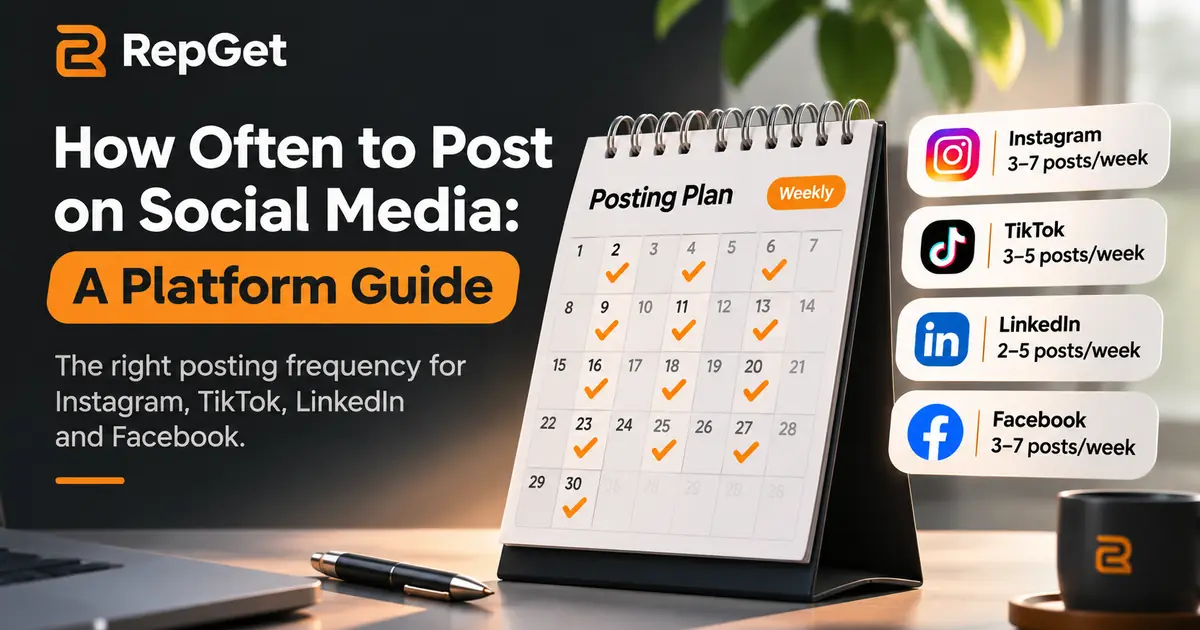
There is no single right number. Instagram and TikTok tend to work well with three to five posts a week, LinkedIn and Facebook with two to four, and Threads or YouTube Shorts can take near-daily short posts if you have the capacity. The frequency that actually works for your business depends more on quality and consistency than on hitting a specific count.
A small business owner scrolls past a post that claims you need three Instagram posts a day to beat the algorithm.
She runs the shop, answers the phone, and barely gets one post out most weeks.
Now she's wondering if every skipped day is quietly costing her reach, and whether she should drop everything else to catch up.
The honest answer is that nobody, not even the platforms themselves, publishes one correct number for how often to post on social media. What they do say is more useful than a number: post content worth seeing, and show up often enough that people remember you exist. Here's how that turns into an actual weekly schedule for Instagram, TikTok, LinkedIn, Facebook, Threads and YouTube Shorts, sized to how much time you actually have.
Why There's No Single Right Number
Search "how often to post on social media" and you'll find a different number on nearly every result. Some of that comes from real testing. A lot of it comes from someone repeating a number they read somewhere else, with no source attached.
What platforms actually document
None of the major platforms publish a required post count or a guaranteed reach boost for hitting a specific frequency. What their own help centers and creator resources describe instead is consistency and relevance: stay active, post things your audience actually wants to see, and keep showing up. Meta's Business Help Center frames this around posting content people find valuable and remaining active over time, not a fixed daily quota. TikTok's Creator Portal encourages regular posting and testing different ideas to see what resonates, without naming a required number of videos per day. LinkedIn's Help Center talks about keeping a company page active with regular updates rather than specifying an exact cadence. That gap, real documentation that stays general, and confident claims online that get specific, is where most of the conflicting advice comes from.
Why a frequency number alone doesn't predict results
Two businesses can post the same number of times a week and get completely different results, because frequency is only one variable. A bakery posting three sharp, well-lit photos a week will usually do better than one posting seven blurry ones. An account that disappears for a month and comes back doesn't start from zero, but it does lose the habit loop it had built with regular viewers. The number matters less than whether it's a number you can actually sustain with content worth watching.
Platform | What's documented | What's commonly claimed (unverified) |
|---|---|---|
Meta's Business Help Center emphasizes posting content people find valuable and staying active regularly, with no fixed number required | "Post one to two times a day or the algorithm buries you" | |
TikTok | TikTok's Creator Portal encourages regular posting and experimenting with formats, without naming a required daily count | "You must post three or more times a day to grow" |
LinkedIn's Help Center describes keeping a page active with regular updates, without specifying an exact frequency | "Post exactly once a day, never more, never less" | |
Meta's guidance mirrors Instagram's: relevant, valuable content matters more than volume | "Posting more than once a day always hurts reach" |
The Three Factors That Set Your Real Posting Frequency
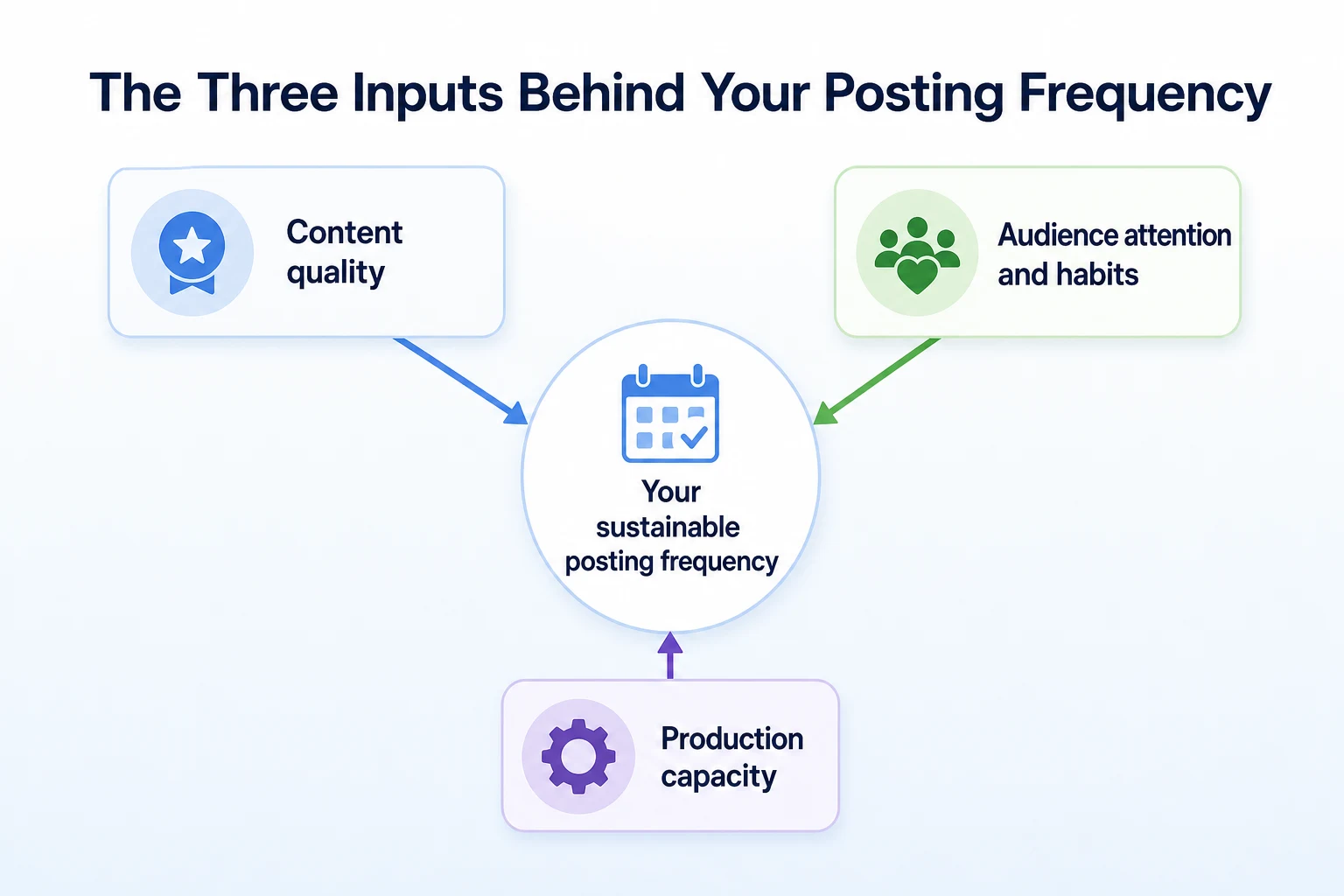
Instead of borrowing a number from a stranger's post, three things actually decide what's sustainable for your business: the quality you can maintain, how your specific audience pays attention, and the time you genuinely have.
Content quality versus quantity
A rushed post that goes out just to hit a quota rarely does the account any favors. If posting five times a week means every post looks thrown together, cutting back to three well-made ones is usually the better trade. Quality isn't about production value alone, a phone photo with a clear point beats a polished one with nothing to say, but it does mean each post should be worth the thirty seconds someone spends on it.
Audience attention and habits
A B2B audience checking LinkedIn during a work break behaves differently from a TikTok audience scrolling in the evening for something to watch. Neither audience is wrong, they just have different habits and different tolerance for frequency. A business selling to other businesses rarely needs to post daily to stay visible to that audience. A consumer brand relying on short video to get discovered by new viewers usually needs to show up more often, simply because each individual video has a shorter shelf life.
Production capacity: what you can actually sustain
The most common reason a posting schedule collapses isn't a bad plan, it's a plan built for a team that doesn't exist. A solo owner realistically has far less time than a marketing team with a content calendar and a camera budget. Pick a frequency you can sustain for months, not the frequency that sounds impressive in a planning meeting. It's easier to add a post once a habit is working than to recover from a schedule that burned someone out in three weeks.
Instagram: Feed Posts, Reels and Stories
Instagram isn't one format anymore, which makes "how often should I post on Instagram" a harder question than it used to be. Feed posts, Reels and Stories each carry a different weight and a different realistic frequency.
Feed posts versus Reels versus Stories
A feed post, a photo or carousel that stays on the profile grid, tends to work well a few times a week rather than daily, since each one takes more effort to put together well. Reels, Instagram's short video format, generally support a higher frequency, since a quick clip takes less production time and has more chances to reach people who don't already follow the account. Stories, which disappear after 24 hours, are built for near-daily use precisely because they're low pressure and temporary. Treating all three as the same "post" and aiming for one number across the board usually leads to posting the wrong format too often or too rarely.
What Meta's documentation actually says
Meta's Business Help Center focuses its posting advice on relevance and consistency rather than a specific count, encouraging businesses to share content their audience finds useful and to post on a schedule they can keep up over time. It doesn't publish a required number of feed posts, Reels or Stories per week. Any specific number you see attached to Instagram success is someone's testing or opinion, not a documented platform requirement, which is worth remembering before reorganizing a week around it.
TikTok: How Often Creators and Businesses Actually Post
TikTok has a reputation for demanding constant posting, and it's true that many successful accounts post often. That's different from the platform requiring it.
What TikTok's own guidance says
TikTok's Creator Portal and its business resources encourage regular posting and trying different content formats to see what connects with an audience, framed as ongoing experimentation rather than a fixed quota. There's no documented rule that an account needs a specific number of videos per day or per week to be found by new viewers. A small business with one person filming on a phone between customers is working under real constraints that a full-time creator account isn't, and TikTok's own guidance doesn't ask either one to hit the same number.
Consistency over volume
What tends to matter more in practice than raw volume is whether an account keeps showing up at all. A business posting twice a week, every week, for months builds a more reliable presence than one that posts daily for two weeks and then goes quiet for a month. If the choice is between a handful of videos made with some care or a daily video made in a rush, picking the number that can hold up over months usually serves the account better than chasing a volume it can't sustain.
LinkedIn: Company Pages Versus Personal Profiles
LinkedIn behaves differently depending on whether a post comes from a company page or a personal profile, and that difference matters more for frequency than most businesses realize.
Company pages versus personal profiles
A company page tends to reach a smaller, more passive audience than a personal profile belonging to someone at that company. People follow company pages for updates, not conversation, which means a page can post less often, often two to four times a week, without looking inactive. A personal profile, especially one belonging to a founder or salesperson, can sustain a higher frequency because LinkedIn's feed tends to favor posts that read like they came from a person rather than a brand account. A business relying only on its company page is usually working with a smaller, slower audience than one where a real person also posts under their own name.
What a B2B audience expects
LinkedIn's audience skims during work hours, often between meetings, which rewards a post that makes its point in the first two lines rather than one that takes paragraphs to get there. That audience also doesn't expect daily content the way a consumer platform's audience might. A steady two to four posts a week, each with something specific to say, tends to hold attention better than a daily post padded out to hit a number. Our breakdown of LinkedIn post analytics 2026 covers how saves, sends and reach get measured on the platform, which is worth reading before assuming a quieter week of posting means a worse one.
Facebook, Threads and YouTube Shorts: The Other Three Platforms
These three platforms get less attention in posting frequency advice than Instagram or TikTok, but each one has its own realistic rhythm worth planning around.
Facebook Pages
Facebook Pages tend to reward a steady presence over a flood of posts, similar to Instagram's feed. A local business posting two to four times a week, mixing updates, photos and the occasional link back to the website, usually keeps a page looking active without demanding daily attention. Facebook groups, where a business has one, often support more frequent, lighter posts than the page itself, since group members tend to expect more back-and-forth than a page's followers do.
Threads
Threads is built around short, frequent posts closer to a running conversation than a curated feed. An account posting once a day, or even a few times a day, doesn't look like it's overdoing it the way the same frequency would on Instagram's main feed, because the format is lighter and the expectation is more casual. A business without much to say every single day is better off posting a few times a week with something real to add, rather than filling Threads daily with filler just because the platform can technically handle more volume.
YouTube Shorts
YouTube Shorts rewards a similar rhythm to TikTok: short, frequent videos that take less production time than a long-form video but still need a reason for someone to watch past the first few seconds. A business already filming short clips for TikTok or Instagram Reels can usually repost the same video to YouTube Shorts with minimal extra work, which makes a near-daily frequency realistic even for a small team, as long as the source footage already exists.
How Often to Post: A Comparison Table by Platform and Team Size
Pulling all of this together into a single table makes it easier to pick a realistic starting point, rather than guessing at a number for each platform separately.
How to read this table
Treat every number below as a starting point to adjust, not a target to hit no matter what. A small business run by one person has far less time than a marketing team, and the right frequency for each reflects that difference rather than ignoring it. If a number here feels too high in your first week of trying it, that's useful information, not a sign you're doing something wrong.
Platform | Small business (one person) | Solo creator | Marketing team | Format note |
|---|---|---|---|---|
2 to 3 feed posts, a few Stories | 3 to 5 Reels, daily Stories | 5 to 7 posts across formats | Stories can run daily at almost any team size | |
TikTok | 1 to 2 videos | 3 to 5 videos | 5 to 7 videos | Reused footage from other platforms can raise this without extra filming |
1 to 2 posts | 2 to 3 posts | 3 to 5 posts | A personal profile often sustains more than the company page | |
2 to 3 posts | 2 to 3 posts | 3 to 5 posts | A linked group can take more frequent, lighter posts | |
Threads | 2 to 3 posts | Near-daily | Near-daily | Short, low-production text fits here more than polished visuals |
YouTube Shorts | 1 to 2 videos | 3 to 5 videos | 5 to 7 videos | Works well as a second home for existing Reels or TikTok clips |
These figures are illustrative starting points, not platform requirements.
Our social media content calendar guide turns numbers like these into an actual day-by-day plan, which is the next step once a realistic frequency is chosen.
A Worked Example: One Week for a Small Business Posting Alone
This example is illustrative, not a record of a real business's week.
Picture a one-person pet grooming business using the small business column from the table above: two to three Instagram posts, one to two TikTok videos, one to two LinkedIn posts, two to three Facebook posts, a couple of Threads posts, and one or two YouTube Shorts, mostly reused footage. Here's how that could land across an actual week.
Day | Platform | Format | Time estimate |
|---|---|---|---|
Monday | Feed photo: before and after grooming | 15 minutes | |
Monday | Threads | Short text post about a scheduling tip | 5 minutes |
Tuesday | TikTok | Short video filmed during a groom | 20 minutes to film and post |
Tuesday | YouTube Shorts | Same clip reposted | 5 minutes |
Wednesday | Community update, a reminder about holiday booking slots | 10 minutes | |
Thursday | Personal profile post about a lesson from running the shop | 15 minutes | |
Friday | Reel: quick grooming tip | 20 minutes | |
Friday | Link post sharing the week's blog article | 5 minutes | |
Saturday | Threads | Short post reacting to a customer question | 5 minutes |
These figures are illustrative.
Nine posts spread across six days, none of them demanding more than twenty minutes, with Sunday left open entirely. That's the kind of week a one-person business can actually repeat month after month, which matters more than any single post on it.
When to Post More, and When to Pull Back
A starting frequency is just that, a start. The right next move depends on what's actually happening with the account, not on a fixed schedule set once and never revisited.
Signs you can sustain more
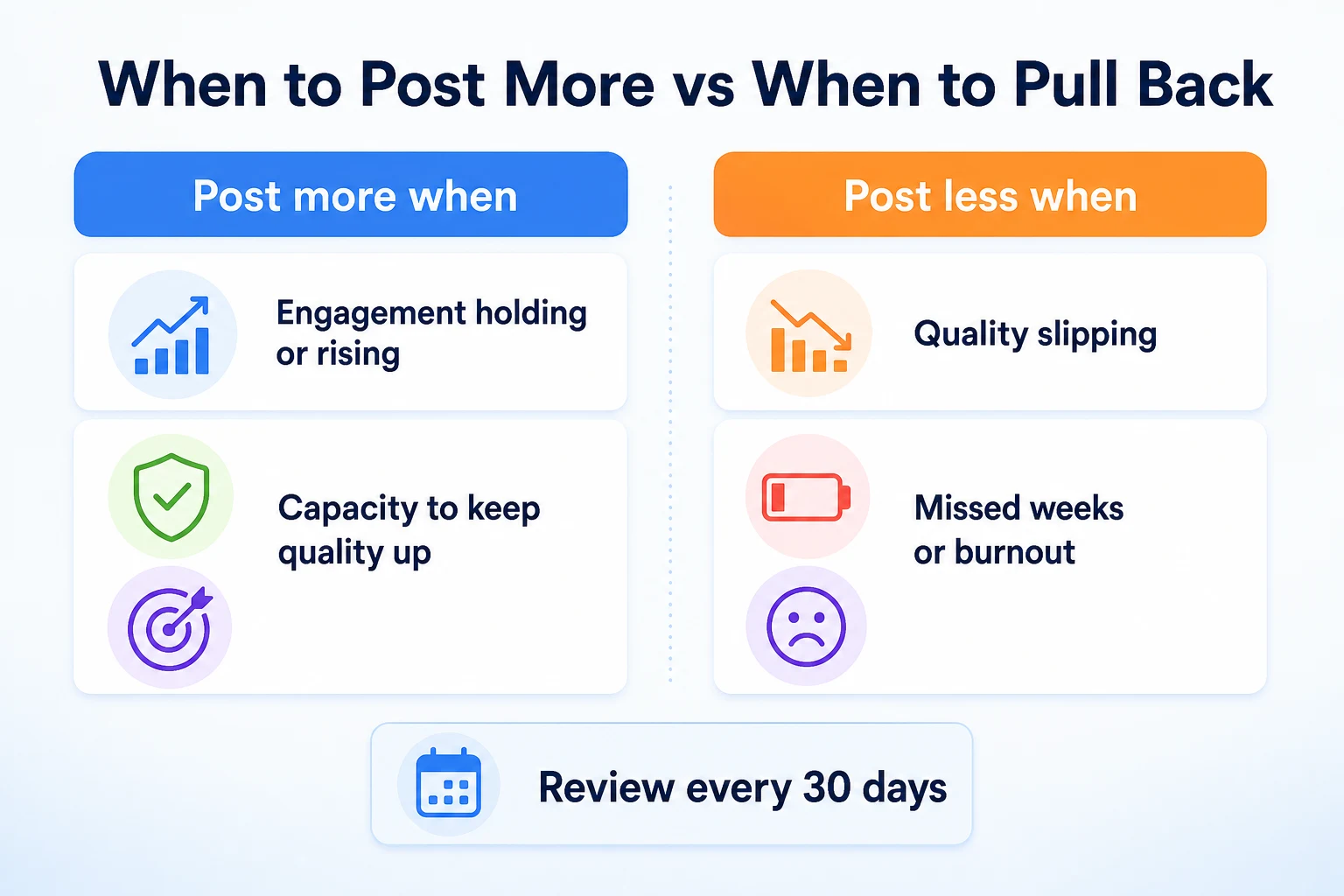
If engagement, comments, saves, replies, is holding steady or climbing at the current frequency, and the person doing the posting still has room in their week, adding one more post a week is a reasonable test. It's also worth adding more where production has gotten faster, a batch of photos from one job site now covers two weeks of posts instead of one, which frees up time without adding new work. A sign that's easy to miss is simply having more to say. If a business just launched a new product or service, a short stretch of heavier posting around that specific thing makes sense, separate from the regular weekly rhythm.
Signs you should cut back
If the quality of recent posts has noticeably dropped, rushed captions, reused photos, a video that clearly took five minutes to make, that's usually a sign the current frequency has outgrown the time available for it. Missed weeks are another signal worth taking seriously: a schedule that keeps falling apart isn't a discipline problem to push through, it's a sign the number itself is too high for the business's actual capacity. Burnout tends to show up quietly, as dread before opening the app rather than a dramatic stop, and it's worth cutting back before that turns into giving up on posting altogether. A simple habit that catches both signals early is a short monthly review, maybe fifteen minutes, looking back at what actually got posted versus what was planned, and adjusting the next month's frequency based on that gap rather than the original plan.
Keeping a Schedule Consistent with AI-Assisted Content Creation
Consistency is the part of posting frequency that actually compounds, and it's also the part most likely to slip when time runs short. AI tools can take some of the pressure off without taking over the judgment calls that keep a feed sounding like a real business.
Where AI speeds up the work
Drafting a first version of a caption, a short script, or a handful of post ideas from a single source, a blog post, a product page, a photo from a job, is the kind of task AI handles quickly and reasonably well. RepGet's free AI Social Media Post Generator turns one page from a website into a handful of draft posts to edit and share, which is a fast way to fill a slow week without starting from a blank prompt box. Our guide to repurposing blog content for social media covers a similar idea in more depth, pulling several posts' worth of material out of one article that's already been written, which helps close the gap between how much content a frequency table asks for and how much a one-person business can realistically produce from scratch each week.
What still needs a human pass
A draft isn't a finished post. Specific details, a customer's actual name, a real product, a staff member's voice, are what separate a post that sounds like a real business from one that reads like it came from a template, and no AI tool fills those in reliably on its own. It's also worth reading a batch of AI-drafted posts together before scheduling any of them, since drafts pulled from the same source tend to repeat the same opening line or closing question more often than a person would notice writing them one at a time. Treat AI as a way to hit a sustainable frequency without burning out on the blank page, not as a replacement for the editing pass that makes each post sound like it actually came from the business posting it.
Common Mistakes That Undermine a Posting Schedule
Most posting schedules don't collapse because the business picked the wrong number. They collapse for a handful of avoidable reasons that show up again and again.
Mistake | Why it backfires | Better move |
|---|---|---|
Copying a competitor's posting frequency exactly | A competitor's team size, audience and content library are different from yours, so their number doesn't transfer cleanly | Use the comparison table earlier in this guide as a starting point, then adjust based on your own capacity |
Chasing a number repeated online with no source | Platforms don't publish a required post count, so a borrowed number is often just someone's guess treated as fact | Start from what each platform's own help documentation actually says, covered earlier in this guide, and test from there |
Posting the same content to every platform at the same frequency | Threads can take near-daily short posts where a LinkedIn company page posting that often starts to look like noise | Set a separate frequency for each platform based on its own format and audience, not one number across the board |
Launching an ambitious schedule in week one | A frequency that assumes unlimited time usually burns out the person doing the posting within a month | Start with a frequency you can sustain for a full quarter, then add more only once it's holding up easily |
Never reviewing whether the schedule is working | A plan set once and left alone can't adjust to dropped quality, missed weeks or a growing audience | Run the short monthly review described earlier in this guide and adjust the next month's frequency based on it |
Treating a missed week as a reason to quit entirely | One gap doesn't erase months of consistent posting, but giving up after it does | Pick back up at the same frequency the following week instead of abandoning the schedule altogether |
Where RepGet fits
RepGet doesn't post to Instagram, TikTok, LinkedIn, Facebook, Threads or YouTube, and it doesn't decide how often your business should post on any of them. That choice depends on your audience, your team and your capacity, the things covered throughout this guide, and it stays with you.
Where it can help is in closing the gap between a realistic weekly frequency and the time it takes to fill it. RepGet's free AI Social Media Post Generator turns one page from your website into a handful of draft posts to edit and share, which is a quick way to cover a slow week without starting from a blank prompt. RepGet also brings website auditing, keyword research, content planning, article writing and publishing into one workflow, with articles able to stay as drafts for your team to review before anything goes live, which matters since a steady posting schedule usually sends people back to a website that needs to hold up once they arrive.
That's worth checking before building a heavier posting habit around it. RepGet's free website audit crawls the site and gives it a 0 to 100 SEO score, with the technical and content issues worth fixing listed out. No account or credit card required. RepGet doesn't guarantee that any post, on any platform, will reach more people, get more engagement or lead to a sale, and nothing here replaces your own judgment about what your audience actually wants to see.
The bottom line
There's no documented number that guarantees a result on Instagram, TikTok, LinkedIn, Facebook, Threads or YouTube Shorts. What the platforms themselves describe is consistency and relevance, posting content worth seeing, often enough that people remember you're there.
The right frequency for your business sits at the intersection of three things: the quality you can hold steady, how your specific audience pays attention, and the time you actually have each week. Start with the comparison table earlier in this guide, try it for a month, and adjust based on what the monthly review actually shows rather than a number borrowed from somewhere else. A schedule you can repeat for a year beats one that looks impressive for two weeks and then disappears.
Find out what your website needs first
Run a free website audit with RepGet to check whether the site your posts link back to is ready before you commit to a heavier posting schedule. No account or credit card required.
FAQ
How many times a week should I post on Instagram?
A one-person business usually does well with two to three feed posts and a few Stories a week, while an account focused on Reels can often sustain three to five without burning out.
Is it bad to post on social media every day?
Not inherently, but only if daily posting doesn't drop quality or burn you out. For most small teams, a few consistent posts a week beats daily posts that start to feel rushed.
How often should a small business post on Facebook?
Two to three posts a week tends to keep a Facebook Page looking active without demanding daily attention, with a linked group able to take more frequent, lighter updates.
Do I need to post daily on TikTok to grow an account?
No. TikTok's own creator resources encourage regular posting and testing formats, not a fixed daily count. One to two videos a week is a reasonable starting point for a small business.
How often should a business post on LinkedIn?
A company page can post two to four times a week without looking inactive, while a personal profile belonging to someone at the business can often sustain more.
What happens if I miss a few days of posting?
A short gap doesn't erase months of consistent posting. The bigger risk is treating the missed days as a reason to quit the schedule entirely instead of picking it back up.
Is consistency more important than frequency on social media?
Generally yes. A lower frequency sustained for months tends to hold an audience's attention better than a high frequency that collapses after a few weeks.
Comments
0 shownShare your thoughts about this article.
New to RepGet? Create a free account to join the conversation.
No comments yet. Be the first to leave one.